For years, universities, hospitals and large corporate campuses have relied on ID badges primarily for access. They open doors, identify employees or students, and help manage secure environments. But what if that same credential could become a seamless way to interact with an entire campus?
That is the opportunity behind the growing convergence of access, identity and payments.
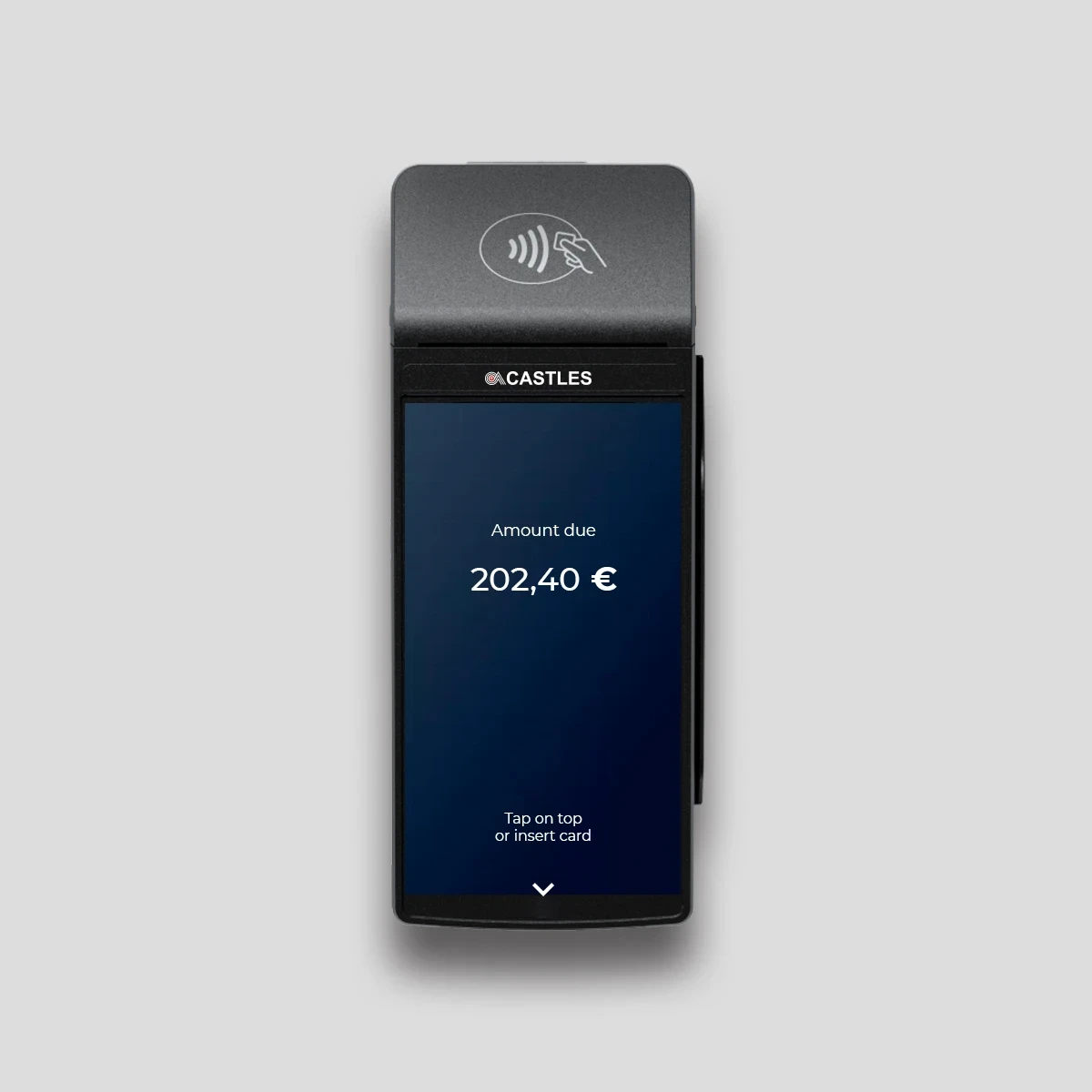
Through its work with HID Global, Castles Technology is helping extend HID Seos® credentials into payment environments by integrating the HID® OMNIKEY® Secure Element directly into compatible Castles payment terminals. The technology allows users to tap an existing physical badge, or supported mobile credential, to complete closed-loop transactions across unattended environments.
The result is much bigger than a new way to pay. It creates the foundation for a connected ecosystem in which one trusted credential can follow a user throughout their day.
One Credential, Many Experiences
Consider a university campus.
A student might begin the morning by tapping their university credential to enter a residence hall. Later, that same credential could be used to purchase a drink from a vending machine, pay for laundry, access a recreation facility, pick up food from an automated retail location or enter a parking garage.
Across a campus, potential touchpoints can include:
- Vending machines and micro-markets
- Dining halls and grab-and-go retail
- Laundry facilities
- Parking and transportation
- Recreation centers and athletic facilities
- Campus bookstores
- Automated lockers
- Residence halls
- Stadiums and event venues
- Charging stations
- Other self-service environments
Instead of asking students and faculty to manage separate cards, payment methods and systems for every interaction, the campus credential can become a common thread connecting the experience.
And increasingly, that credential does not have to be a physical card. The Castles and HID Global integration supports HID Seos physical cards as well as Seos credentials provisioned to supported smartphones and smartwatches through Apple Wallet and Google Wallet. That flexibility can make the experience feel much more natural to users who already expect their phone or watch to function as part of their digital identity.
The Real Innovation Is the Ecosystem
Closed-loop technology becomes especially powerful when organizations stop thinking about it as a single payment transaction and start thinking about the complete ecosystem behind the transaction.
Successful deployments can bring together credential and security providers such as HID Global, payment technology providers such as Castles, vending and unattended retail equipment manufacturers, consumer brands, software platforms and the institution operating the environment. Each participant solves a different part of the problem. HID Global provides the trusted credential infrastructure. Castles brings that credential into payment and unattended commerce environments. Equipment manufacturers create the physical points of interaction. Retail and consumer brands deliver products and services. Universities, hospitals and corporations connect those technologies around the needs of their communities.
That collaboration opens the door to experiences that would be difficult for any one provider to deliver independently.
For vending and unattended retail in particular, it can create entirely new models. Machines are no longer simply places to insert a card or make a purchase. They become connected endpoints within a broader institutional ecosystem.
Making Closed-Loop Deployment Easier
One of the most important considerations in any campus-wide technology project is infrastructure. Replacing hundreds or thousands of deployed devices simply to introduce a new credential capability can quickly make a project expensive and disruptive.
The Castles and HID Global approach helps address that challenge. On compatible Castles terminals, the HID OMNIKEY Secure Element uses an available Secure Access Module, or SAM, slot within the device. Supported terminals can then receive the required firmware remotely, allowing operators to add HID credential capability without replacing the entire terminal. That creates a more scalable migration path and helps protect existing technology investments.
The capability is designed for unattended applications including vending machines, automated retail kiosks, EV charging stations and parking systems, with support extending across a range of Castles unattended terminals as well as the S1F4 Pro.
Convenience Without Compromising Security
The value of closed-loop systems ultimately comes down to balancing two priorities: making experiences easier while maintaining trust and control. For users, the benefit is simplicity. The credential they already carry can become a familiar way to interact throughout the environment. For institutions, connecting transactions to a managed credential ecosystem can provide greater control over who can access particular services and how credentials are provisioned.
And because the model works across physical and mobile credentials, institutions gain flexibility as user expectations evolve. That combination of convenience, security and adaptability makes the model equally compelling beyond higher education.
A hospital campus, for example, could connect employee credentials with parking, cafeterias, vending, automated retail and EV charging. A large corporate headquarters could use the same approach across employee dining, micro-markets, fitness facilities, parking and other workplace amenities.
A New Model for Connected Environments
The next generation of unattended commerce will not be defined by a payment terminal operating in isolation.
It will be defined by connected ecosystems.
Identity providers, payment technology companies, equipment manufacturers, brands and institutions each bring an important piece of the puzzle. When those pieces work together, everyday interactions become simpler and physical environments become more intelligent.
One credential can become the connection point for an entire experience.
And as payment, identity and access continue to converge, the companies capable of bringing those technologies together will help define what the connected campus looks like next.